
Difficult Airways
V2 Platform

One trainer.
Different airway challenges.
Swap the airway in seconds to create a different difficult airway scenario.
Each airway changes the anatomy in a different way and gives learners a specific problem to recognise and manage. All difficult airways work with the V2 airway-position and vocal-cord-closure adjustments. This means you can increase or reduce the difficulty without changing the airway. Difficult airways are sold separately.
*Optional V2 Platform add-on - sold separately. Requires the Airway Management Task Trainer V2.
Angioedema Airway

Oropharynx and epiglottis

Glottic
view
The enlarged, protruding tongue greatly reduces the space available in the mouth.
This makes conventional laryngoscopy more difficult and limits the space available for airway devices.
Swelling around the arytenoids and vocal cords narrows the airway and makes the glottic opening harder to identify and access.
Use this airway to practise:
-
Assessing a severely swollen airway
-
Difficult laryngoscopy
-
Fibre-optic airway navigation
-
Awake and nasal fibre-optic techniques
Supraglottic Mass Airway
A large supraglottic mass changes the normal anatomy and obstructs the view of the larynx.

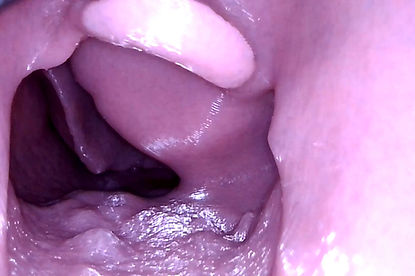
Oropharynx and epiglottis
Glottic
view
The mass occupies part of the supraglottic space and changes the appearance of normal airway landmarks.
Learners must recognise the remaining anatomy and find a route towards the larynx.
The mass partly obstructs the glottic view and reduces the space available for airway instrumentation.
Use this airway to practise:
-
Recognising distorted airway anatomy
-
Maintaining orientation when landmarks are obscured
-
Navigating around an airway mass
-
Controlled tube placement through a restricted view
Epiglottitis Airway
An enlarged and swollen epiglottis creates a very different view from a normal airway.


Oropharynx and epiglottis
Glottic
view
The epiglottis is enlarged, thickened and difficult to move.
Normal landmarks are less clear and there is less room to manoeuvre airway devices.
The swollen epiglottis limits the view of the vocal cords and makes access to the glottic opening more difficult.
Use this airway to practise:
-
Recognising abnormal epiglottic anatomy
-
Working with a restricted airway view
-
Careful scope or blade manipulation
-
Controlled navigation towards the glottic opening
Inhalation Injury Airway (Burn)
A swollen and distorted airway with visible soot, designed to reproduce key airway changes associated with inhalation injury.

Oropharynx and epiglottis

Glottic
view
Swelling and soot change the appearance of the upper airway.
Normal landmarks become less clear as the airway becomes more distorted.
Oedematous tissues reduce the glottic view and leave less space for airway instrumentation.
The V2 vocal cord closure mechanism can be used to simulate laryngospasm and increase the difficulty further.
Use this airway to practise:
-
Recognising signs of inhalation injury
-
Identifying swollen and altered airway anatomy
-
Managing a restricted glottic view
-
Intubation through a progressively more difficult airway