

V2 Airway Training
Platform
One platform. many airway scenarios.
V2 is a modular airway training platform. Start with the standard airway and lungs, then change the model to suit the skill or scenario you want to practise.
Swap the airway. Change the teeth. Add secretions. Practise a surgical airway. Or replace the lungs with a bronchial tree for bronchoscopy training.
The same core model can be used again and again for different training sessions.
*Already own a V2? Your trainer remains compatible with our new modules and difficult airways.
A new neck upgrade is also available, adding the latest anterior/posterior airway-position adjustment to existing V2 trainers. See our V2 Platform FAQ for full details on upgrades, compatibility and available options.
V2 Airway Management Task Trainer

A practical, reliable tool for airway training
The V2 Airway Trainer is built for hands-on practice, day after day. It’s fully modular, with replaceable parts and a quick-release system that lets you swap the airway in seconds – ideal for switching between standard and difficult scenarios without breaking the session.
The V2 airway is the most realistic we’ve made. It’s the result of months of refinement and direct comparisons with clinical cadavers.
You can feel the difference in how the tongue, epiglottis and vocal cords respond during laryngoscopy and intubation. It supports valleculoscopy and advanced airway management techniques.
The head is heavy and stable. All forces are calibrated to match real-life conditions. It can also be used in a semi-vertical position for awake intubation training.
Bag-valve-mask ventilation feels lifelike, with realistic compliance and movement of the silicone lungs. The model is reinforced with mesh in key areas to improve durability – and we include a repair kit so any damage can be fixed quickly on-site.
KEY-FEATURES

*Built for realistic intubation
The airway responds like real tissue — tested against clinical cadavers for lifelike feel and behaviour.

*Semi-vertical positioning
Designed for upright scenarios like awake or fibreoptic intubation.

*Fully modular design
All parts are replaceable. Swap airways in seconds using the built-in quick-release system.

*Airway position adjustment
Move the airway anteriorly or posteriorly to vary intubation difficulty.
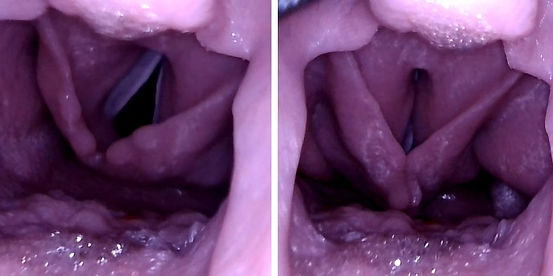
*Vocal cord adjustment
Adjust the vocal cords to simulate unilateral paralysis or laryngospasm.
V2 Modules
*sold separately

Turn the V2 into
a bronchoscopy trainer
The module includes a detailed bronchial tree made from five interchangeable sections.
Use it to practise bronchoscope navigation, explore bronchial anatomy and train with simulated mucus, secretions and foreign bodies.

Turn the V2 into a cricothyroidotomy trainer
The module includes palpable landmarks, a mobile trachea and replaceable skin and tissue inserts.
Change the inserts to vary the difficulty and reset the trainer quickly between attempts.

Add simulated blood and secretions to any airway
The module is quick to set up, easy to reset and simple to clean.
Use it with standard or difficult airways to make airway management more challenging.
Swap difficult airways
*sold separately

Angioedema
A large protruding tongue and swelling around the arytenoids and vocal cords create a severely restricted airway.

Supraglottic Mass
A large mass changes the normal anatomy and obstructs the view of the glottis.

Epiglottitis
A markedly enlarged and swollen epiglottis makes the airway more difficult to identify and access.

Inhalation Injury
Swelling, distorted anatomy and visible soot reproduce key airway changes associated with inhalation injury.
Change the teeth

Buck Teeth
Prominent upper teeth reduce the space available for laryngoscopy.

Loose Teeth
Loose teeth can become dislodged if excessive force is applied during laryngoscopy.

Missing Teeth
Missing teeth change the oral anatomy and available working space.
Mix and match
The different parts of the platform can be combined.
For example, use a difficult airway with secretions, add difficult teeth, change the airway position or adjust the vocal-cord opening.
This lets you create a wide range of airway scenarios without replacing the complete trainer.